

Compression springs are among the most essential mechanical components used across modern industries. Although small in size, they perform critical functions by storing mechanical energy, absorbing shock, reducing vibration and maintaining consistent force whenever pressure is applied. Their ability to return to their original shape after compression makes them highly reliable for applications that demand repeated movement and long service life.
Today, industries rely on precision-engineered compression springs to improve product performance, safety and operational efficiency. As manufacturing technologies continue to evolve, spring manufacturers in India are developing advanced spring solutions that meet the growing demands of sectors such as automotive, aerospace, medical, industrial machinery, electronics and consumer products.
Choosing the right compression spring is not simply about selecting the correct size. Material quality, load capacity, operating environment and design accuracy all influence how effectively a spring performs over time. Understanding where and how compression springs are used helps businesses select the right solution for their applications.
In this blog, we will take a closer look at the common applications of compression springs, their benefits and why they remain one of the most widely used mechanical components across industries.
What Are Compression Springs?
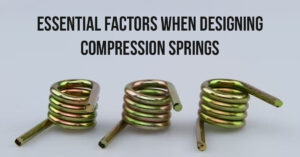
Compression springs are open-coil helical springs specifically designed to resist compressive forces. When a load is applied, the spring compresses and stores mechanical energy. Once the force is removed, it expands back to its original length while releasing the stored energy.
Their straightforward design makes them suitable for a wide range of applications that require controlled movement, cushioning, shock absorption or pressure regulation. Compression springs can be manufactured in different sizes, wire diameters, materials and load capacities to meet the needs of specific industries.
Whether installed in heavy industrial equipment or small household devices, compression springs help ensure reliable and consistent mechanical performance.
Why Compression Springs Are Used Across Industries
Compression springs continue to be one of the most preferred spring types because they offer excellent performance under repeated loading conditions. Their versatility allows them to function effectively in both lightweight consumer products and heavy-duty industrial equipment.
Some of the key advantages include:
- Excellent shock and vibration absorption
- Consistent force throughout repeated compression cycles
- Long operational life with proper material selection
- High durability under demanding working conditions
- Availability in various sizes and load capacities
- Easy customization for industry-specific requirements
- Reliable performance with minimal maintenance
These qualities make compression springs a practical solution wherever controlled force and repeated movement are required.
Common Applications of Compression Springs
Automotive Industry
The automotive industry is one of the largest users of compression springs. Vehicles contain numerous spring components that improve comfort, safety and overall driving performance.
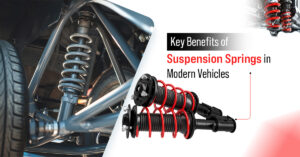
Compression springs are commonly used in suspension systems, braking systems, fuel injectors, engine valves, clutches, seating mechanisms and transmission assemblies. In suspension systems, they absorb road shocks and vibrations, helping maintain vehicle stability while improving passenger comfort.
Inside engines, compression springs assist with valve operation by ensuring proper timing and smooth movement. Their durability allows them to perform efficiently despite continuous exposure to heat, pressure and repeated mechanical stress.
Without compression springs, many automotive systems would experience reduced efficiency and increased wear.
Industrial Machinery
Industrial manufacturing equipment operates under demanding conditions where precision and reliability are essential. Compression springs help machines perform repetitive operations while minimizing component wear and reducing vibration.
They are widely used in:
- Packaging machines
- Conveyor systems
- Industrial presses
- Automated production lines
- Valves and actuators
- Material handling equipment
These springs help maintain proper pressure, improve machine accuracy and extend equipment lifespan by reducing unnecessary mechanical stress.
As industries continue adopting automation, the demand for precision compression springs continues to grow.
Medical Equipment
Medical devices require components that deliver highly accurate and consistent performance. Compression springs provide smooth mechanical movement while maintaining strict quality and reliability standards.
They are commonly found in surgical instruments, diagnostic equipment, hospital beds, inhalers, insulin delivery devices, infusion pumps, laboratory instruments and rehabilitation equipment.
Because patient safety depends on reliable equipment, compression springs used in medical applications are manufactured with precision and carefully selected materials that resist corrosion and repeated use.
Consumer Products
Many products used every day contain compression springs, although most people rarely notice them. These springs improve functionality while making products easier and more comfortable to use.
Common examples include:
- Ballpoint pens
- Door locks
- Electrical switches
- Household appliances
- Kitchen equipment
- Office chairs
- Fitness equipment
- Luggage handles
Each time a button returns to its original position or a mechanism operates smoothly, a compression spring is often performing the work behind the scenes.
Their simple design and long-lasting performance make them ideal for products that experience frequent daily use.
Aerospace Industry
The aerospace industry demands exceptional precision, reliability, and durability from every component. Compression springs are designed to perform consistently even under extreme conditions such as continuous vibration, fluctuating temperatures, and varying pressure levels.
They play a critical role in several aircraft systems, including:
- Landing gear systems
- Flight control assemblies
- Hydraulic systems
- Engine components
- Cabin equipment
- Safety and locking mechanisms
Manufactured with high-performance materials and tight engineering tolerances, compression springs help ensure smooth operation, enhanced safety and dependable performance throughout the aircraft’s service life.
Electronics and Electrical Equipment
As electronic devices become smaller and more advanced, the need for compact, high-performance mechanical components continues to grow. Compression springs provide consistent force and reliable movement while fitting into limited spaces without affecting the overall product design.
They are widely used in:
- Battery compartments
- Electrical relays
- Switches
- Connectors
- Circuit breakers
- Sensors
- Electrical terminals
- Testing and measuring equipment
Their precision, durability, and space-efficient design make compression springs an essential component in modern electronic and electrical systems, helping ensure reliable performance throughout the product’s lifespan.
Agricultural Equipment
Agricultural machinery operates in challenging environments involving dust, moisture, vibration, and heavy loads. Compression springs help maintain reliable equipment performance despite these demanding conditions.
They are used in seed drills, harvesting equipment, irrigation systems, tractors, planting machinery, and fertilizer spreaders.
These springs help absorb impact, maintain component alignment, and improve equipment durability, allowing farmers to achieve consistent performance during extended operating hours.
Factors to Consider When Choosing Compression Springs
Selecting the right compression spring requires careful evaluation of several technical factors. Using an improperly designed spring can affect equipment performance, increase maintenance requirements, and shorten product lifespan.
Some important considerations include:
- Required load capacity
- Spring rate
- Available installation space
- Wire diameter
- Material selection
- Operating temperature
- Corrosion resistance
- Expected number of compression cycles
Working with an experienced spring manufacturer helps ensure that every specification is matched accurately to the intended application.
Why Quality Manufacturing Matters
The performance of a compression spring depends heavily on manufacturing precision. Even minor variations in dimensions or material quality can affect load capacity, durability, and overall reliability.
A professionally manufactured compression spring offers several advantages:
- Better dimensional accuracy
- Improved fatigue resistance
- Longer service life
- Consistent performance under repeated loading
- Reduced maintenance requirements
- Higher operational efficiency
Investing in high-quality springs often reduces long-term operating costs by minimizing equipment failures and replacement frequency.
Conclusion
At Accurate Springs Pvt Ltd, we believe that every application deserves precision, reliability, and long-lasting performance. As experienced Compression Spring Manufacturers, we design and manufacture high-quality compression springs that meet the diverse needs of industries including automotive, industrial machinery, medical equipment, aerospace, electronics and consumer products. Our focus on engineering excellence, strict quality control and customized manufacturing enables us to deliver spring solutions that perform consistently under demanding operating conditions. Whether you require standard designs or custom-engineered compression springs, Accurate Springs Pvt Ltd is committed to providing dependable products that help improve the efficiency, durability, and performance of your equipment.
FAQs
1. What are compression springs used for?
Compression springs are used to absorb shock, store mechanical energy, provide resistance, reduce vibration and maintain controlled movement in various mechanical systems across multiple industries.
2. Which industries commonly use compression springs?
Compression springs are widely used in the automotive, aerospace, manufacturing, medical, electronics, agriculture, construction and consumer goods industries due to their versatility and dependable performance.
3. What materials are used to manufacture compression springs?
Compression springs are commonly made from stainless steel, carbon steel, alloy steel, phosphor bronze and other materials selected based on application, operating temperature, and environmental conditions.
4. Can compression springs be custom manufactured?
Yes. Compression springs can be customized in terms of size, wire diameter, material, load capacity, spring rate and finish to meet the specific requirements of different industrial applications.
5. Why is choosing the right compression spring important?
Selecting the right compression spring improves performance, enhances equipment efficiency, extends service life, reduces maintenance and ensures reliable operation.


No comment yet, add your voice below!